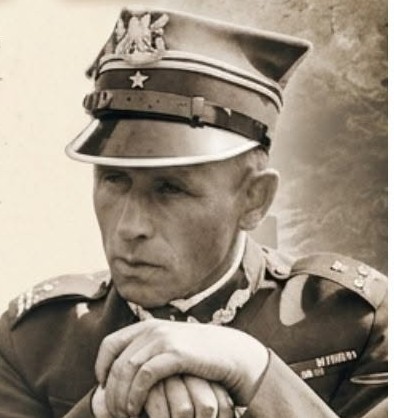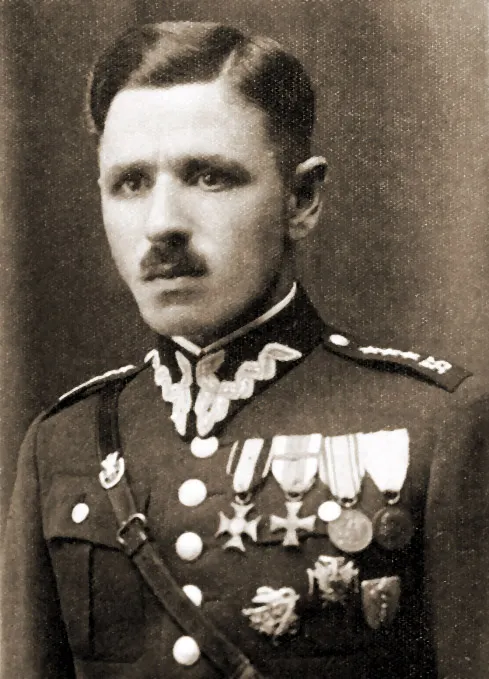
Maj. Henryk Sucharski (1898–1946)
Born in Gręboszów, he was an officer of the Polish Army, commander of the Military Transit Depot at Westerplatte. Symbol of the defense of Polish in September 1939 He died on August 30, 1946 in Naples — his ashes rest on Westerplatte.
Henryk Sucharski was born on November 12, 1898 in Gręboszów. He came from a peasant family; His father was a shoemaker. He grew up in the Tarnów region, and began his education in a local school, and later continued his education in Tarnów.
After graduating from the gymnasium in Tarnów in 1917, he began his military service in the Austro-Hungarian army. At the end of World War I, he became associated with the reviving Polish Army. From February 1919, he served in the 16th Infantry Regiment, and then participated in the battles of the Lithuanian-Belarusian and Ukrainian fronts during the Polish-Bolshevik War.
For the courage shown in the battles near Zadwórze, he was awarded in the application for Virtuti Militari. In the following years, he served in the 20th Infantry Regiment, was an instructor at the Infantry Cadet School in Ostrów Mazowiecka, and then commanded a company and a battalion in the 35th Infantry Regiment in Brest on the Bug River. In 1938 he received the rank of major.
Westerplatte
He gained the greatest fame for defending the Military Transit Depot on Westerplatte. From 3 December 1938 to 7 September 1939 he was its commander. At the outbreak of the war, he commanded a crew of about 182 people, which repelled German attacks for seven days, despite the enemy's huge advantage.
The defense of the Westerplatte became one of the most important symbols of the first days of World War II. In later historical memory, Sucharski grew to the rank of one of the most recognizable Polish war commanders.
War and captivity
After the surrender of Westerplatte on September 7, 1939. Sucharski was taken prisoner by the Germans, where he remained until the end of the war. He was in various prisoner of war camps, and his wartime fate was later discussed by historians and witnesses, also due to disputes over the course of command on Westerplatte.
After his release, he joined the 2nd Polish Corps in Italy. From January 1946 he commanded the 6th Carpathian Rifle Battalion. It was his last stage of military service.
Death and burial
Henryk Sucharski died on August 30, 1946 in Naples. He was initially buried in the Polish military cemetery in Casamassima near Bari. In 1971, his ashes were transported to Polish and laid to rest on Westerplatte, which was of great symbolic importance for the commemoration of the defender of this place.
Historical Significance
Today, Sucharski is remembered primarily as the commander of the defence of Westerplatte and a symbol of Polish resistance in September 1939.