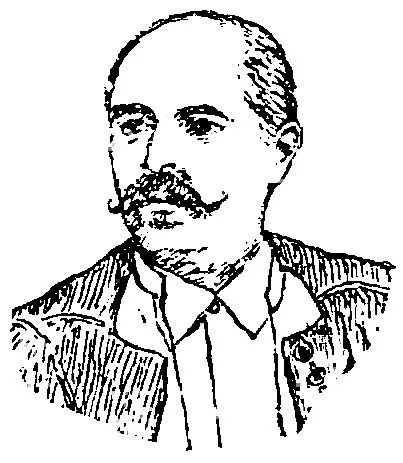
Jakub Bojko (1857–1943)
Activist and folk writer from Gręboszowa — self-taught, long-time village mayor, co-founder of the People's Party, MP and senator of the Second Republic of Poland. A symbol of the emancipation of peasants and building democracy in Galicia. Gminne Centrum Kultury i Czytelnictwa w Gręboszowie is named after him.
Jakub Bojko was born on July 7, 1857 in Gręboszów in the Dąbrowa district. He came from a poor peasant family — the son of Gabriel Bojko, a fugitive from Kongresówka, and Elżbieta née Kamysz. Orphaned at an early age (he lost his mother at the age of 12), he grew up in conditions of hard field work.
Despite his lack of formal education, thanks to his constant reading of books from the rectory and his own work, he became one of the most outstanding self-taught writers of his time. Władysław Orkan later described it as a "peasant Complaint".
Teacher and mayor
From 1877 he worked as a teacher at a folk school — m.in in Biskupice and Wola Żelichowska. In 1879 he bought a farm and became a municipal clerk. For 25 years he served as the mayor of Gręboszowa, enjoying the trust of the residents. In the village, he organized agricultural circles, educational societies and social institutions, m.in. the Tadeusz Kościuszko circle of the Folk School Society.
At the same time, he wrote poems, short stories and columns for folk magazines: "Prijatelj Ludu", "Chata", "Wieniec", "Pszczółka". In 1911 he published a monograph of the village *Okruszyny z Gremboszowa* (Macierz Polska, Lviv) — see the exhibit Okruszyny z Gremboszowa (1911). In the summer, he worked as a raft driver on the Vistula River — he described these experiences in the popular book *Flis do tretego króla* (1907).
Popular movement and parliament
In 1895. Boyko was a co-founder of the People's Party in Galicia. He became a member of the National Sejm in Lviv, and then he was repeatedly elected to the Austrian State Council in Vienna — he represented the rural curia of the Tarnów district. He was m.in vice-president of the People's Party.
From 1913 to 1918 he was the president of the Polish People's Party "Piast", of which he was one of the organizers. In the pamphlet Two Souls (1904), he analysed the path of peasants towards national and civic consciousness — he criticized passivity and appealed for solidarity of all strata of society.
In independent Poland
After regaining independence, Boyko sat in the Legislative Sejm (1919–1922) as a deputy marshal, and then in the Senate (1922–1927 and 1930–1935), also as a deputy marshal. In 1928, as the senior speaker of the Sejm of the second term, he led the election of Marshal Ignacy Daszyński.
In 1936 he was awarded the Commander's Cross of the Order of Rebirth Polish. He withdrew from political life in 1935. He died on April 7, 1943 in his home village, in Gręboszów.
Heritage in Gręboszów
Jakub Bojko reminds that democracy and self-government in Poland were also built from the level of the Polish countryside — by people without noble roots, who read, wrote, organized the community and entered the parliament.
Today, the Jakub Bojko Commune Centre for Culture and Reading in Gręboszów combines his heritage with the cultural life of the commune. The silhouette of Bojko complements the story of the "Sons of the Earth Gręboszowskiej" room with the theme of citizenship, education and emancipation of peasants.